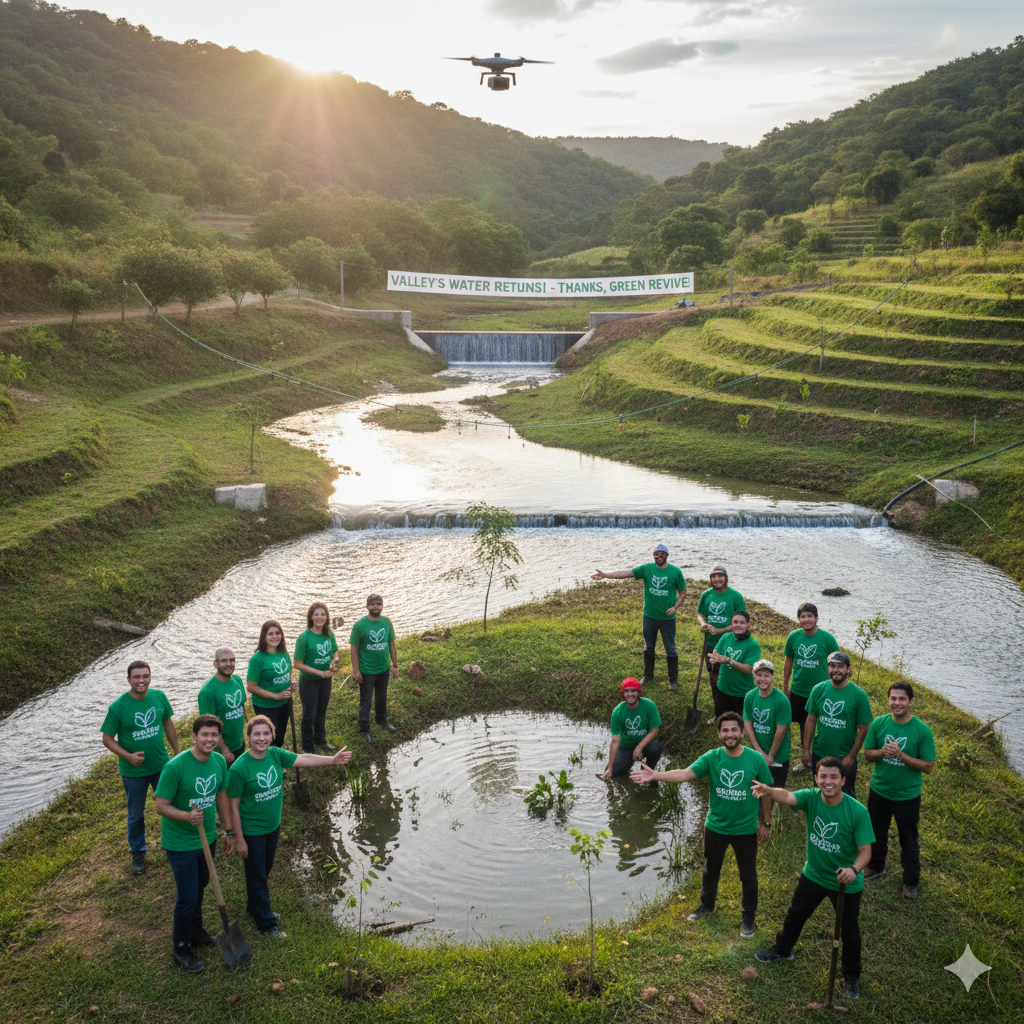
Across the Valley, several water bodies that were once declared “dead” or beyond revival are showing remarkable signs of recovery—clearer water, returning birdlife, rejuvenated springs, and renewed community engagement. At the heart of this revival is a dedicated environmental group whose grassroots approach has turned environmental despair into collective hope.
A Crisis Years in the Making
Kashmir’s lakes and wetlands—such as Dal Lake, Wular, Anchar, Hokersar, and numerous lesser-known ponds and springs—are not merely scenic landmarks. They regulate floods, recharge groundwater, support livelihoods, and sustain local ecosystems. However, decades of neglect left them vulnerable.
Untreated sewage flowed freely into lakes. Plastic waste accumulated along banks. Wetlands were reclaimed for construction. Natural water channels were blocked. Springs that once supplied drinking water to villages vanished silently.
What made the crisis worse was a growing sense of helplessness—many believed the damage was irreversible.
The Group That Chose to Act
Amid this grim backdrop, an environment group—comprising conservationists, scientists, students, and local volunteers—decided to challenge the narrative of loss. Rather than waiting for large-scale government intervention, they focused on community-driven, science-backed restoration.
Their work began modestly: mapping dying water bodies, documenting pollution sources, and educating nearby residents about the long-term consequences of neglect. What set them apart was persistence. Cleanup drives were repeated, not symbolic. Restoration plans were tailored to each site rather than following a one-size-fits-all model.
Restoring Nature, Step by Step
The group’s efforts combined traditional ecological knowledge with modern conservation techniques. Blocked natural inlets and outlets were reopened to restore water flow. Invasive weeds were removed manually to prevent chemical damage. Native vegetation was replanted along banks to stabilise soil and improve water quality.
Perhaps most importantly, sewage discharge points were identified and diverted, reducing direct contamination. In spring zones, catchment areas were protected to allow groundwater recharge. Slowly, water levels stabilised. Clarity improved. Aquatic life began to return.
In some revived wetlands, migratory birds—absent for years—have started to reappear, a strong indicator of ecological recovery.
Community at the Core
The success of the revival lies not just in environmental engineering but in community participation. The group actively involved local residents, fishermen, students, and shopkeepers, helping them see water bodies not as dumping grounds but as shared heritage.
Workshops, awareness walks, and school programmes fostered a sense of ownership. In several areas, local volunteers now monitor water quality, prevent encroachments, and organise periodic cleanups without external prompting.
This shift—from dependence to stewardship—has proven crucial in ensuring that revived water bodies remain protected.
More Than Environmental Impact
The revival has brought tangible social and economic benefits. Cleaner lakes and streams have improved local microclimates, reduced foul odours, and enhanced groundwater availability. In some areas, livelihoods linked to fishing and eco-tourism are slowly returning.
Equally significant is the psychological impact. Seeing a once-polluted lake regain life has restored public faith in conservation. It has shown that environmental damage, while severe, is not always permanent if action is timely and collective.
A Model for the Future
As climate change intensifies and water scarcity looms, the Valley’s revived water bodies stand as living proof that grassroots environmental action can deliver real results. The group’s work is now being cited as a model for sustainable restoration—one that prioritises local involvement, respects natural systems, and focuses on long-term protection rather than short-term fixes.
Their journey underscores a powerful lesson: saving nature does not always require massive infrastructure or distant policies. Sometimes, it begins with a few determined individuals, a shared sense of responsibility, and the belief that even dying ecosystems deserve a second chance.
In the gentle ripples of revived lakes and the steady flow of reborn springs, the Kashmir Valley is rediscovering not just its waters—but its connection to nature itself.