Navreh is the traditional New Year festival of the Kashmiri Pandit community and holds immense cultural, historical, and spiritual significance in Kashmir. Celebrated on the first day of the lunar month of Chaitra (March–April), Navreh marks the beginning of a new year according to the ancient Kashmiri lunar calendar, one of the oldest calendars in the Indian subcontinent.
The word “Navreh” is derived from two Sanskrit words: “Nav” meaning new and “Reh” meaning day, symbolizing renewal, fresh beginnings, and hope. The festival has been observed in Kashmir for thousands of years and is deeply rooted in the region’s Shaivite traditions and scholarly heritage.
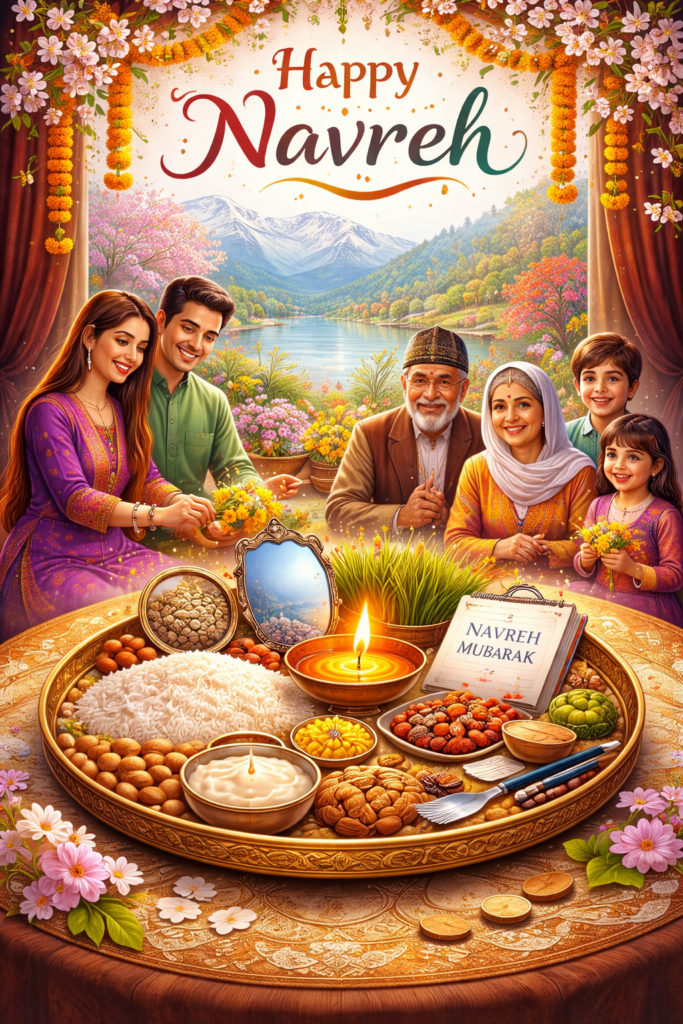
A unique and sacred ritual of Navreh is the preparation of the Navreh Thali, which is arranged the night before the festival. Early in the morning, family members view this ceremonial plate as the first sight of the new year, believing it brings good fortune and positivity. The thali typically contains rice, flowers, milk, yogurt, salt, walnuts, coins, a pen, a mirror, a new almanac (Panchang), and a symbolic image of a deity. Each item represents prosperity, wisdom, abundance, purity, and spiritual balance for the year ahead.
Navreh is also closely associated with astrology and timekeeping, as the new Kashmiri calendar is formally read and announced on this day. Families consult the Panchang to understand important dates, festivals, and auspicious timings for the coming year, reinforcing the festival’s connection to knowledge and tradition.
Homes are thoroughly cleaned and decorated, reflecting the spirit of renewal. Families gather to perform special prayers and seek blessings for health, harmony, and success. Traditional Kashmiri dishes are prepared, often including vegetarian delicacies and festive meals shared with loved ones, strengthening family bonds and cultural continuity.
Beyond religious observance, Navreh is a celebration of Kashmir’s ancient identity, resilience, and cultural pride. For the Kashmiri Pandit community, especially those living outside the Valley, the festival serves as a powerful reminder of their roots and heritage. Cultural programs, community gatherings, and recitations of traditional verses often accompany the celebrations, keeping ancestral customs alive across generations.
Navreh also symbolizes the arrival of spring in Kashmir, aligning with nature’s rebirth as almond blossoms bloom and the valley awakens from winter. This harmony between nature, time, and tradition makes Navreh not just a New Year celebration, but a profound cultural expression of Kashmir’s timeless civilization.
Today, Navreh stands as a symbol of unity, hope, and continuity, reflecting Kashmir’s pluralistic history and its deep respect for tradition, knowledge, and renewal. It remains an integral part of Srinagar’s cultural landscape and an enduring testament to the Valley’s rich spiritual and historical legacy.