
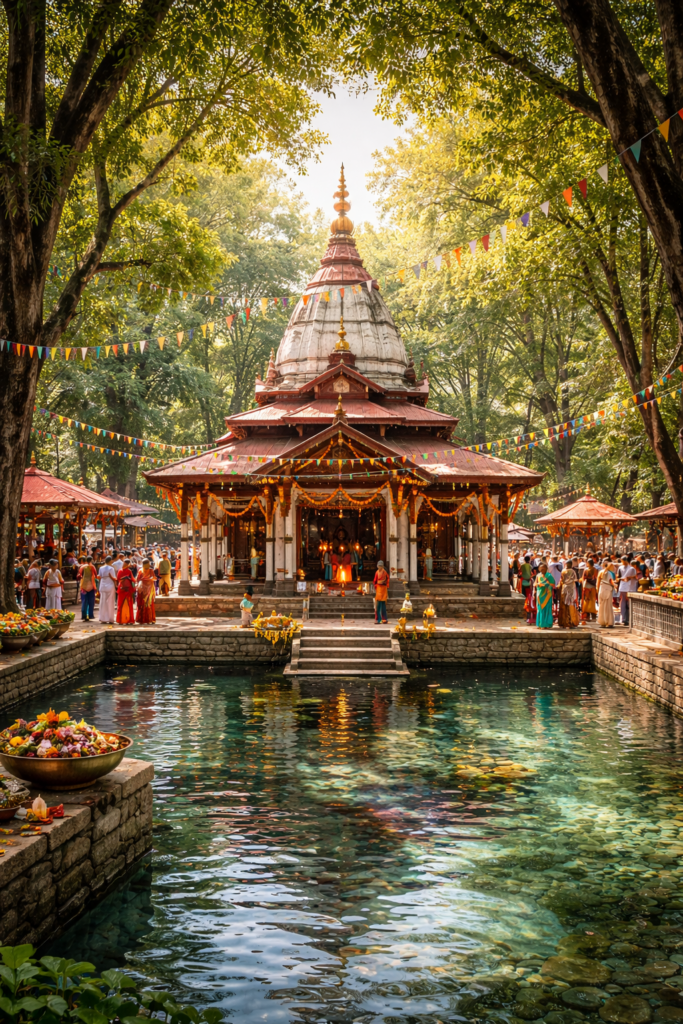
The Kheer Bhawani Temple, also known as the Mata Ragnya Devi Temple, is one of the most revered Hindu shrines in the Kashmir Valley. Located at Tulmul, approximately 25 kilometers from Srinagar, the temple holds immense religious, cultural, and emotional significance, especially for the Kashmiri Pandit community. Nestled amidst tall chinar trees and tranquil surroundings, the temple is a symbol of devotion, faith, and the enduring spiritual heritage of Kashmir.
At the heart of the temple lies a natural spring, believed to be sacred, over which the temple structure is built. What makes Kheer Bhawani unique is the mystical color-changing water of this spring. Devotees believe that variations in the water’s color—from clear and milky white to shades of blue, green, or even darker hues—are divine संकेत (omens) reflecting future events. This phenomenon has deep spiritual meaning and has strengthened the temple’s reputation as a place of divine communication and prophecy.
The temple is dedicated to Goddess Ragnya Devi, a manifestation of Goddess Durga. According to legend, the goddess was originally worshipped in Lanka, but was later brought to Kashmir by Lord Hanuman and enshrined at Tulmul. Over centuries, the goddess has been regarded as the protective deity of Kashmir, and the temple remains a powerful center of Shakti worship in the region.
Architecturally, the temple is modest yet elegant, blending seamlessly with its natural environment. The shrine sits at the center of the spring, connected by a small bridge, and is surrounded by a circular stone platform where devotees gather for prayers. The calm sound of flowing water, combined with the fragrance of incense and chanting of mantras, creates a deeply meditative and spiritually uplifting atmosphere.
One of the most important occasions at Kheer Bhawani Temple is Zyestha Ashtami, usually celebrated in May or June. On this day, thousands of devotees travel from different parts of India to offer prayers, perform rituals, and present kheer (rice pudding) to the goddess—an offering from which the temple derives its popular name. The festival transforms the temple complex into a vibrant spiritual gathering, filled with devotion, traditional music, and cultural unity.
Beyond its religious importance, Kheer Bhawani Temple stands as a symbol of resilience and hope. For many displaced Kashmiri Pandits, the temple represents an emotional connection to their ancestral homeland. Despite challenges faced over decades, the shrine continues to attract pilgrims and tourists alike, serving as a reminder of Kashmir’s pluralistic past and its rich spiritual traditions.
Today, the temple is maintained by the local administration and security forces, ensuring a safe and welcoming environment for visitors. Surrounded by lush greenery, flowing waters, and mountain air, Kheer Bhawani Temple offers not only a place of worship but also a space for inner peace, reflection, and spiritual rejuvenation.
In essence, Kheer Bhawani Temple is more than just a religious site—it is a sacred symbol of Kashmir’s spiritual soul, divine femininity, and timeless devotion, inviting every visitor to experience faith in its purest and most serene form.