Cats And Dogs

Temples

chatgpt image dec 30, 2025, 02 19 19 pm

Martand Sun Temple (Historical Significance)

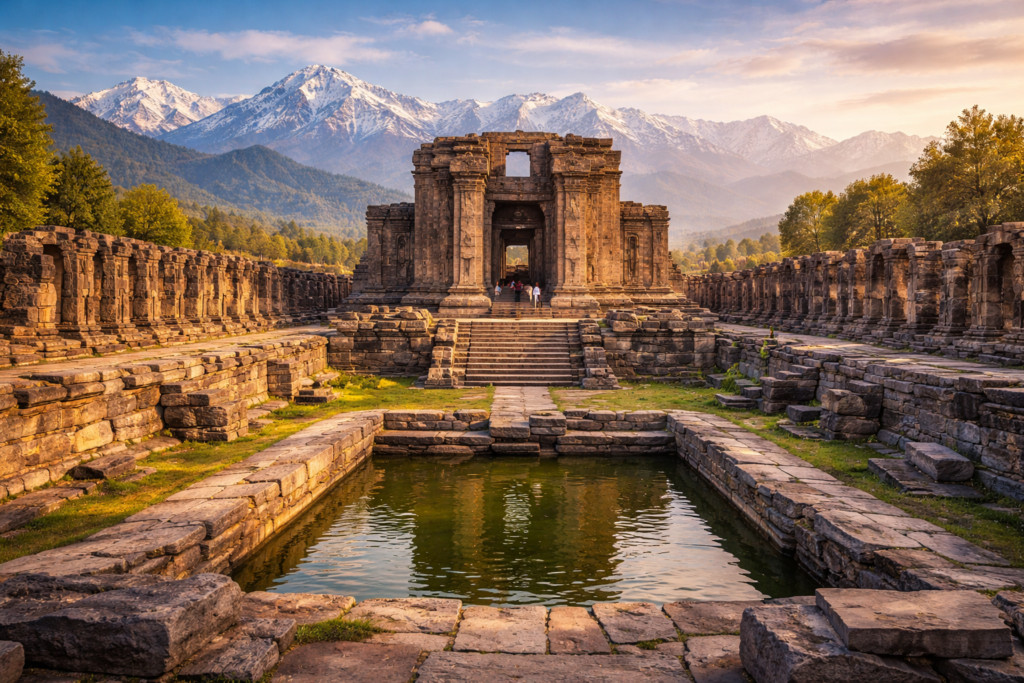
The Martand Sun Temple stands as one of the most magnificent and historically significant architectural masterpieces of ancient India and Kashmir. Located at Martand, near Anantnag, about 60 km from Srinagar, this grand temple complex is dedicated to Surya, the Sun God, and represents the zenith of early medieval Kashmiri temple architecture. Though now in majestic ruins, Martand continues to evoke awe through its scale, symmetry, and timeless artistic vision. Constructed in the 8th century CE during the reign of Lalitaditya Muktapida of the Karkota dynasty, the temple symbolizes the political power, cultural prosperity, and artistic excellence of ancient Kashmir. Lalitaditya was known as one of the greatest rulers of the region, and the Martand Sun Temple served not only as a religious center but also as a statement of royal authority and devotion. Architecturally, the temple is a remarkable fusion of Gandharan, Gupta, and local Kashmiri styles, making it unique among Indian temples. Built entirely of limestone, the complex is set on a high plateau overlooking the lush Kashmir Valley, offering sweeping views of mountains, rivers, and fertile plains. The main shrine once housed the idol of the Sun God, positioned so that the first rays of sunrise would illuminate the sanctum, reflecting the temple’s cosmic and astronomical symbolism. The temple complex is enclosed by a massive rectangular courtyard, surrounded by 84 smaller shrines, each intricately carved and evenly spaced, demonstrating advanced planning and geometric precision. A grand colonnaded entrance leads to the central shrine, whose tall columns and elaborate carvings once reflected both spiritual reverence and artistic sophistication. Even in its ruined state, the temple’s massive stone pillars, sculpted doorways, and detailed friezes speak of exceptional craftsmanship. Beyond its architectural brilliance, the Martand Sun Temple holds deep religious and cultural importance. Sun worship was a prominent aspect of ancient Kashmiri spirituality, and the temple served as a major pilgrimage site for centuries. It reflects Kashmir’s historical role as a crossroads of ideas, blending influences from Central Asia, the Indian subcontinent, and local traditions. The decline of the temple began in the 15th century, when it was severely damaged and eventually abandoned. Despite this, Martand Sun Temple remains a powerful symbol of Kashmir’s ancient heritage and artistic legacy. Historians, archaeologists, photographers, and travelers continue to visit the site, drawn by its haunting beauty and historical depth. Today, the Martand Sun Temple is protected as a national monument, standing as a silent yet eloquent reminder of Kashmir’s glorious past. Its ruins, bathed in golden sunlight at dawn and dusk, offer a profound experience—where history, spirituality, and nature converge. More than just a ruin, Martand is a testament to human creativity, devotion, and the enduring spirit of Kashmiri civilization.

Martand Sun Temple (Historical Significance) Read More »
chatgpt image dec 30, 2025, 02 16 19 pm

Durga Nag Temple

Durga Nag Temple is one of the most revered and ancient Hindu temples in Srinagar, nestled gracefully at the foothills of the Zabarwan Range, overlooking the city and Dal Lake. Dedicated to Goddess Durga, the temple is a significant spiritual center for devotees and holds a special place in the religious and cultural heritage of Kashmir. The temple derives its name from the sacred “Nag” (spring) that lies at its heart. This natural spring, believed to be perennial, is considered holy and symbolises purity, life, and divine energy. The calm waters of the spring, surrounded by towering chinar trees and mountain slopes, create an atmosphere of serenity and deep spiritual reflection. The gentle sound of flowing water combined with the cool mountain breeze enhances the meditative experience for visitors. Architecturally, Durga Nag Temple reflects traditional Kashmiri temple design, characterized by simplicity, stone structures, and a harmonious blend with the surrounding natural landscape. Unlike grand monumental temples, its modest yet sacred structure emphasizes spiritual depth over physical grandeur. The sanctum houses the deity of Goddess Durga, worshipped in her powerful yet compassionate form as the protector of righteousness and remover of evil. Durga Nag holds immense importance in Kashmiri Shaivism and Shakti traditions, symbolizing the balance between strength and peace. The temple is especially vibrant during Navratri, when devotees gather in large numbers to offer prayers, light lamps, and perform rituals seeking blessings for prosperity, protection, and well-being. The chants, offerings, and festive spirit during this time transform the temple into a center of devotion and cultural unity. Beyond its religious significance, Durga Nag Temple is admired for its picturesque surroundings. Situated amidst lush greenery and backed by snow-capped peaks during winter months, the temple offers breathtaking views that attract not only pilgrims but also nature lovers and photographers. Its location provides a quiet escape from the bustle of city life, making it an ideal spot for contemplation and spiritual rejuvenation. Durga Nag Temple also stands as a symbol of Srinagar’s pluralistic heritage, reflecting centuries of coexistence and shared cultural history in the region. It continues to be a place where faith, nature, and tradition come together seamlessly. Today, Durga Nag Temple remains a cherished landmark of Srinagar—offering devotees a sanctuary of peace, strength, and divine grace, while inviting visitors to experience the spiritual essence and timeless beauty of Kashmir.

Durga Nag Temple Read More »

chatgpt image dec 30, 2025, 02 13 40 pm

Sharika Devi Temple (Hari Parbat)

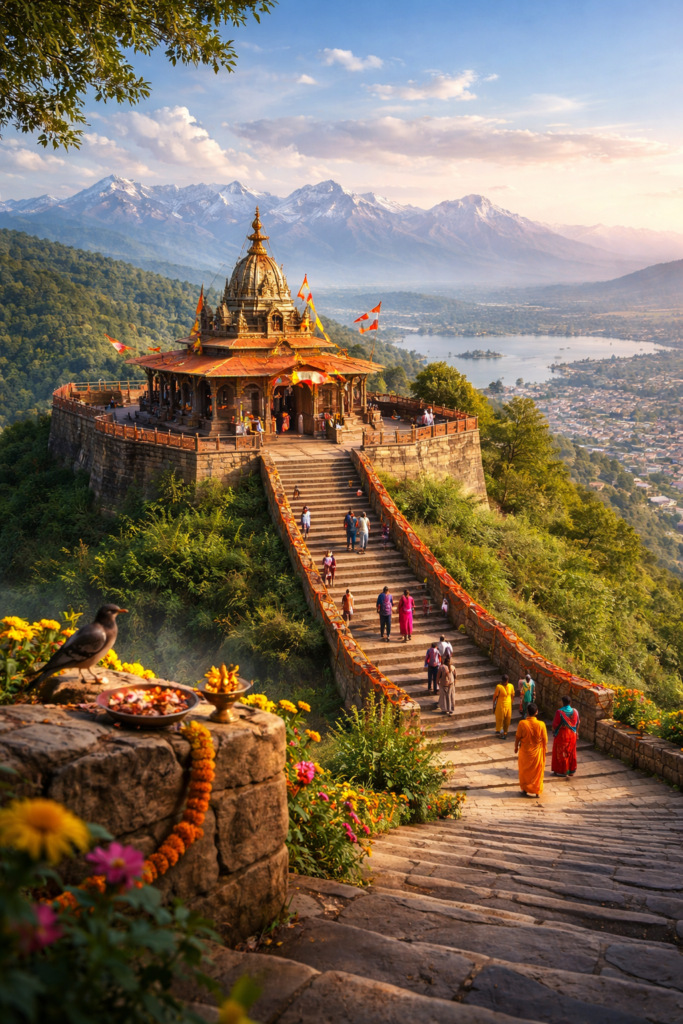
The Sharika Devi Temple, located atop the revered Hari Parbat Hill in Srinagar, is one of the most ancient and spiritually significant temples in Kashmir. Dedicated to Goddess Sharika, a manifestation of Goddess Durga, the temple holds a central place in the religious and cultural life of the region. Goddess Sharika is regarded as the presiding deity of Srinagar, and the hill itself is believed to be her sacred abode. According to legend, Goddess Sharika appeared in the form of a myna bird to defeat the demon Jalodbhava, who had terrorized the Kashmir Valley. After vanquishing the demon, the goddess is believed to have settled on Hari Parbat, making the hill a powerful symbol of divine protection. Because of this legend, the myna bird remains an important symbol associated with the deity and the temple. The temple is uniquely represented by a sacred rock (Shila) rather than a conventional idol. This rock is worshipped as the embodiment of Goddess Sharika, reflecting ancient Kashmiri Shaiva and Shakta traditions. The simplicity of the shrine contrasts beautifully with its profound spiritual energy, attracting devotees seeking peace, blessings, and inner strength. Hari Parbat Hill itself is one of the most sacred sites in Kashmir. Encircled by historic fortification walls built during the Mughal and Afghan periods, the hill stands as a testament to the region’s layered history. The fortifications surrounding the hill add to the temple’s grandeur and make it a landmark that seamlessly blends spiritual heritage with historical architecture. The temple offers breathtaking panoramic views of Srinagar, including Dal Lake, the old city, and the surrounding mountains. The serene atmosphere, cool mountain air, and scenic beauty enhance the spiritual experience for pilgrims and visitors alike. The climb to the temple, whether on foot or by road, is often described as meditative and rewarding. Sharika Devi Temple holds special importance during Navratri and other auspicious Hindu festivals, when devotees from across the country visit to offer prayers. Despite its ancient origins, the temple continues to remain a living center of worship, symbolizing resilience, devotion, and faith. Beyond its religious significance, the temple stands as a cultural symbol of Kashmir’s pluralistic heritage. The presence of multiple religious sites around Hari Parbat highlights the region’s long history of coexistence and spiritual harmony. In essence, the Sharika Devi Temple is not just a place of worship but a spiritual guardian of Srinagar, embodying divine power, ancient legend, and timeless serenity. It remains a must-visit destination for pilgrims, history enthusiasts, and travelers seeking to connect with the sacred soul of Kashmir.

Sharika Devi Temple (Hari Parbat) Read More »

chatgpt image dec 30, 2025, 02 11 01 pm

Kheer Bhawani (Mata Ragnya Devi) Temple

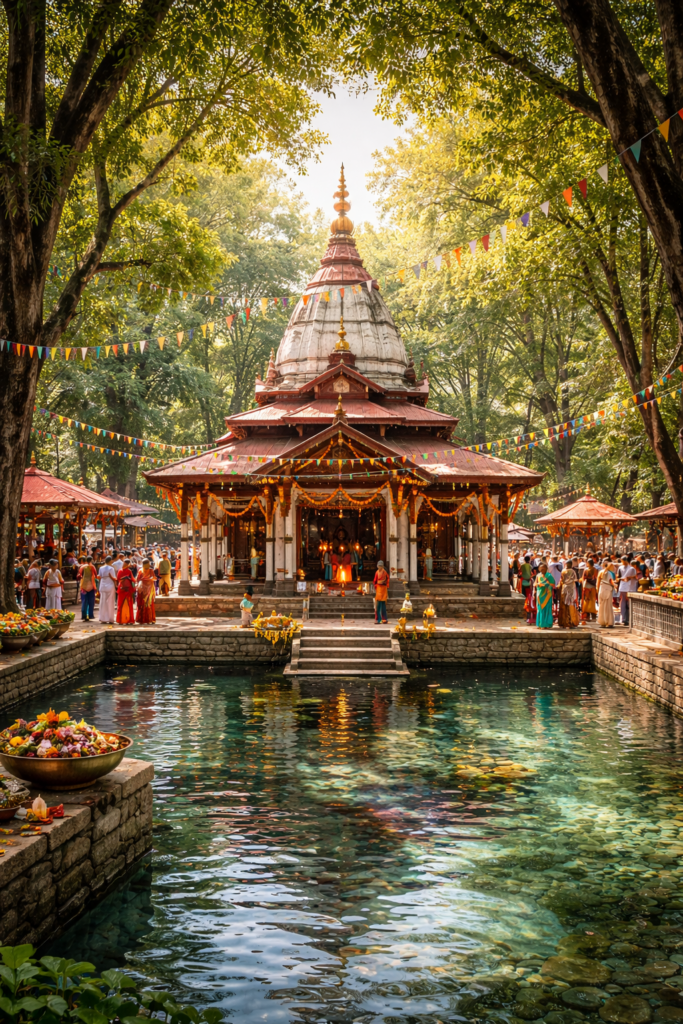
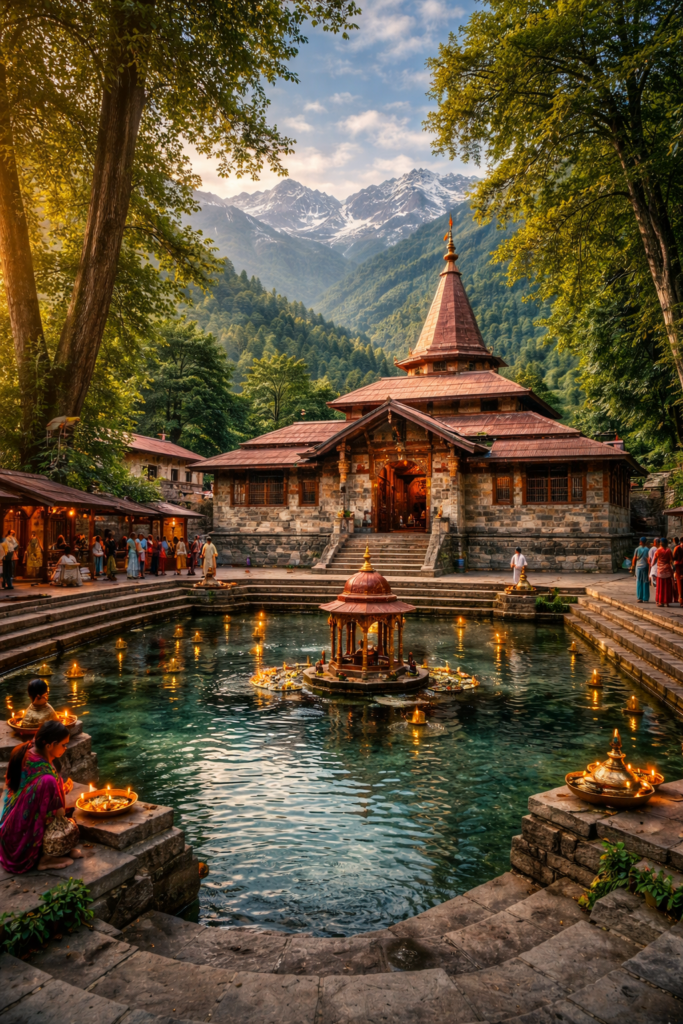
The Kheer Bhawani Temple, also known as the Mata Ragnya Devi Temple, is one of the most revered Hindu shrines in the Kashmir Valley. Located at Tulmul, approximately 25 kilometers from Srinagar, the temple holds immense religious, cultural, and emotional significance, especially for the Kashmiri Pandit community. Nestled amidst tall chinar trees and tranquil surroundings, the temple is a symbol of devotion, faith, and the enduring spiritual heritage of Kashmir. At the heart of the temple lies a natural spring, believed to be sacred, over which the temple structure is built. What makes Kheer Bhawani unique is the mystical color-changing water of this spring. Devotees believe that variations in the water’s color—from clear and milky white to shades of blue, green, or even darker hues—are divine संकेत (omens) reflecting future events. This phenomenon has deep spiritual meaning and has strengthened the temple’s reputation as a place of divine communication and prophecy. The temple is dedicated to Goddess Ragnya Devi, a manifestation of Goddess Durga. According to legend, the goddess was originally worshipped in Lanka, but was later brought to Kashmir by Lord Hanuman and enshrined at Tulmul. Over centuries, the goddess has been regarded as the protective deity of Kashmir, and the temple remains a powerful center of Shakti worship in the region. Architecturally, the temple is modest yet elegant, blending seamlessly with its natural environment. The shrine sits at the center of the spring, connected by a small bridge, and is surrounded by a circular stone platform where devotees gather for prayers. The calm sound of flowing water, combined with the fragrance of incense and chanting of mantras, creates a deeply meditative and spiritually uplifting atmosphere. One of the most important occasions at Kheer Bhawani Temple is Zyestha Ashtami, usually celebrated in May or June. On this day, thousands of devotees travel from different parts of India to offer prayers, perform rituals, and present kheer (rice pudding) to the goddess—an offering from which the temple derives its popular name. The festival transforms the temple complex into a vibrant spiritual gathering, filled with devotion, traditional music, and cultural unity. Beyond its religious importance, Kheer Bhawani Temple stands as a symbol of resilience and hope. For many displaced Kashmiri Pandits, the temple represents an emotional connection to their ancestral homeland. Despite challenges faced over decades, the shrine continues to attract pilgrims and tourists alike, serving as a reminder of Kashmir’s pluralistic past and its rich spiritual traditions. Today, the temple is maintained by the local administration and security forces, ensuring a safe and welcoming environment for visitors. Surrounded by lush greenery, flowing waters, and mountain air, Kheer Bhawani Temple offers not only a place of worship but also a space for inner peace, reflection, and spiritual rejuvenation. In essence, Kheer Bhawani Temple is more than just a religious site—it is a sacred symbol of Kashmir’s spiritual soul, divine femininity, and timeless devotion, inviting every visitor to experience faith in its purest and most serene form.

Kheer Bhawani (Mata Ragnya Devi) Temple Read More »

chatgpt image dec 30, 2025, 02 08 23 pm

Shankaracharya Temple

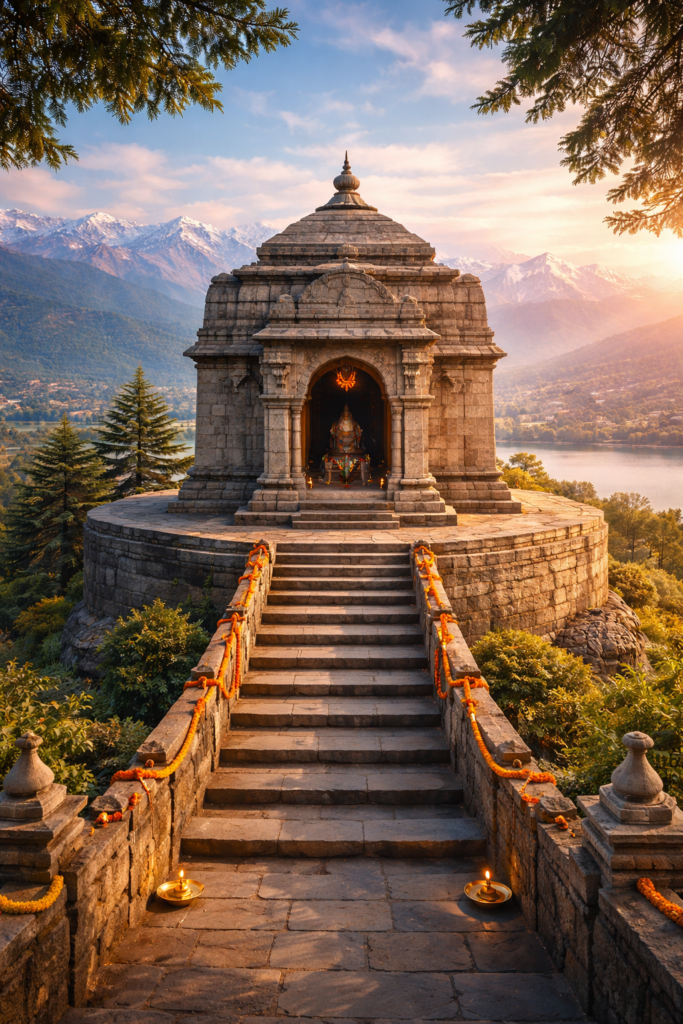
Perched majestically atop the Shankaracharya Hill (also known as Takht-e-Suleiman), the Shankaracharya Temple is one of the most revered and iconic landmarks of Srinagar. Dedicated to Lord Shiva, this ancient temple stands at an elevation of about 1,100 feet above the city, offering breathtaking panoramic views of Dal Lake, the Zabarwan mountain range, and the entire Srinagar valley. Its commanding location and spiritual aura make it a must-visit destination for pilgrims, historians, and travelers alike. The temple is believed to date back to over a thousand years, with its origins often linked to Aditya Sena (7th century), though it gained prominence after the visit of the great philosopher Adi Shankaracharya in the 8th century. According to tradition, Adi Shankaracharya meditated at this site, leading to the temple being named in his honor. Over centuries, the structure has undergone several renovations, reflecting layers of Kashmir’s rich historical and religious evolution. Architecturally, the Shankaracharya Temple is simple yet powerful in design. Built from solid stone blocks, the temple stands on a high octagonal platform that can be reached by a flight of stone steps. The sanctum houses a Shiva Lingam, symbolizing Lord Shiva as the supreme cosmic force. The minimalistic structure, devoid of excessive ornamentation, enhances the sense of spiritual purity and timelessness associated with the shrine. Beyond its religious importance, the temple also holds immense cultural and strategic significance. Historically, the hill served as a lookout point due to its elevated position, offering a natural vantage over the city and surrounding landscapes. Today, visitors are drawn not only by devotion but also by the unmatched views that unfold from the hilltop—especially during sunrise and sunset, when the valley is bathed in golden hues. The atmosphere around the temple is deeply serene and contemplative. The gentle mountain breeze, the distant reflections of Dal Lake, and the quiet chants of devotees together create a profoundly peaceful experience. For many, a visit to Shankaracharya Temple is as much a spiritual journey as it is a visual and emotional one. As one of the oldest and most significant temples in Kashmir, the Shankaracharya Temple stands as a powerful symbol of Srinagar’s spiritual heritage, resilience, and harmony between nature and faith. It continues to inspire devotion, awe, and reverence, making it an enduring landmark in the cultural and religious landscape of the Kashmir Valley.

Shankaracharya Temple Read More »