Cats And Dogs

Festivals

chatgpt image dec 30, 2025, 12 28 21 pm

Navreh (Kashmiri New Year)

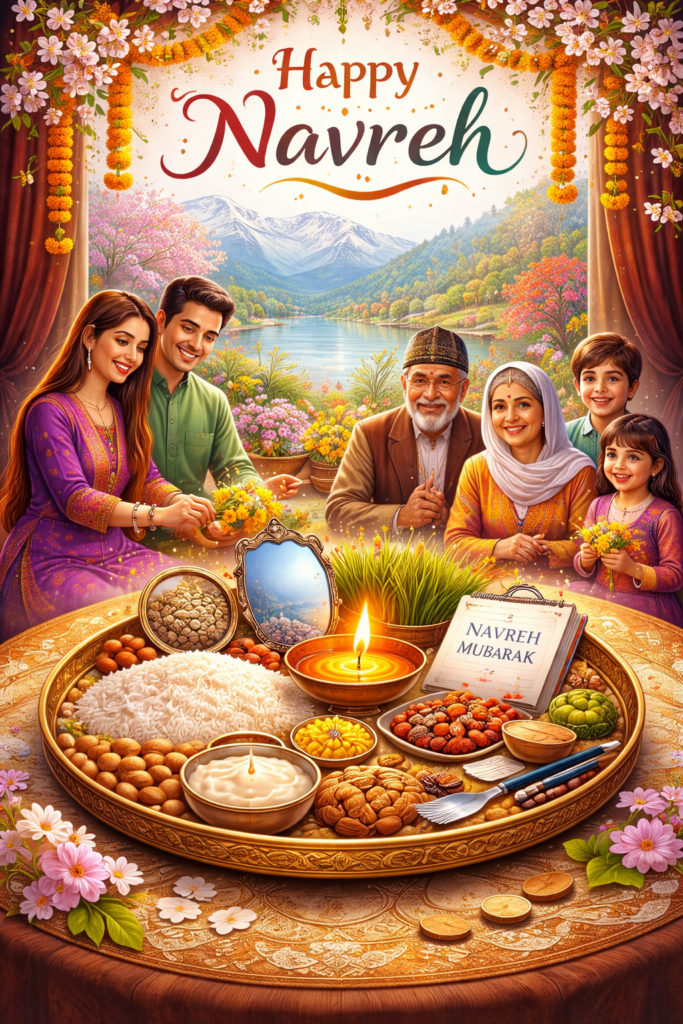
Navreh is the traditional New Year festival of the Kashmiri Pandit community and holds immense cultural, historical, and spiritual significance in Kashmir. Celebrated on the first day of the lunar month of Chaitra (March–April), Navreh marks the beginning of a new year according to the ancient Kashmiri lunar calendar, one of the oldest calendars in the Indian subcontinent. The word “Navreh” is derived from two Sanskrit words: “Nav” meaning new and “Reh” meaning day, symbolizing renewal, fresh beginnings, and hope. The festival has been observed in Kashmir for thousands of years and is deeply rooted in the region’s Shaivite traditions and scholarly heritage. A unique and sacred ritual of Navreh is the preparation of the Navreh Thali, which is arranged the night before the festival. Early in the morning, family members view this ceremonial plate as the first sight of the new year, believing it brings good fortune and positivity. The thali typically contains rice, flowers, milk, yogurt, salt, walnuts, coins, a pen, a mirror, a new almanac (Panchang), and a symbolic image of a deity. Each item represents prosperity, wisdom, abundance, purity, and spiritual balance for the year ahead. Navreh is also closely associated with astrology and timekeeping, as the new Kashmiri calendar is formally read and announced on this day. Families consult the Panchang to understand important dates, festivals, and auspicious timings for the coming year, reinforcing the festival’s connection to knowledge and tradition. Homes are thoroughly cleaned and decorated, reflecting the spirit of renewal. Families gather to perform special prayers and seek blessings for health, harmony, and success. Traditional Kashmiri dishes are prepared, often including vegetarian delicacies and festive meals shared with loved ones, strengthening family bonds and cultural continuity. Beyond religious observance, Navreh is a celebration of Kashmir’s ancient identity, resilience, and cultural pride. For the Kashmiri Pandit community, especially those living outside the Valley, the festival serves as a powerful reminder of their roots and heritage. Cultural programs, community gatherings, and recitations of traditional verses often accompany the celebrations, keeping ancestral customs alive across generations. Navreh also symbolizes the arrival of spring in Kashmir, aligning with nature’s rebirth as almond blossoms bloom and the valley awakens from winter. This harmony between nature, time, and tradition makes Navreh not just a New Year celebration, but a profound cultural expression of Kashmir’s timeless civilization. Today, Navreh stands as a symbol of unity, hope, and continuity, reflecting Kashmir’s pluralistic history and its deep respect for tradition, knowledge, and renewal. It remains an integral part of Srinagar’s cultural landscape and an enduring testament to the Valley’s rich spiritual and historical legacy.

Navreh (Kashmiri New Year) Read More »
chatgpt image dec 30, 2025, 12 20 21 pm

Kashmir Arts & Crafts Festival

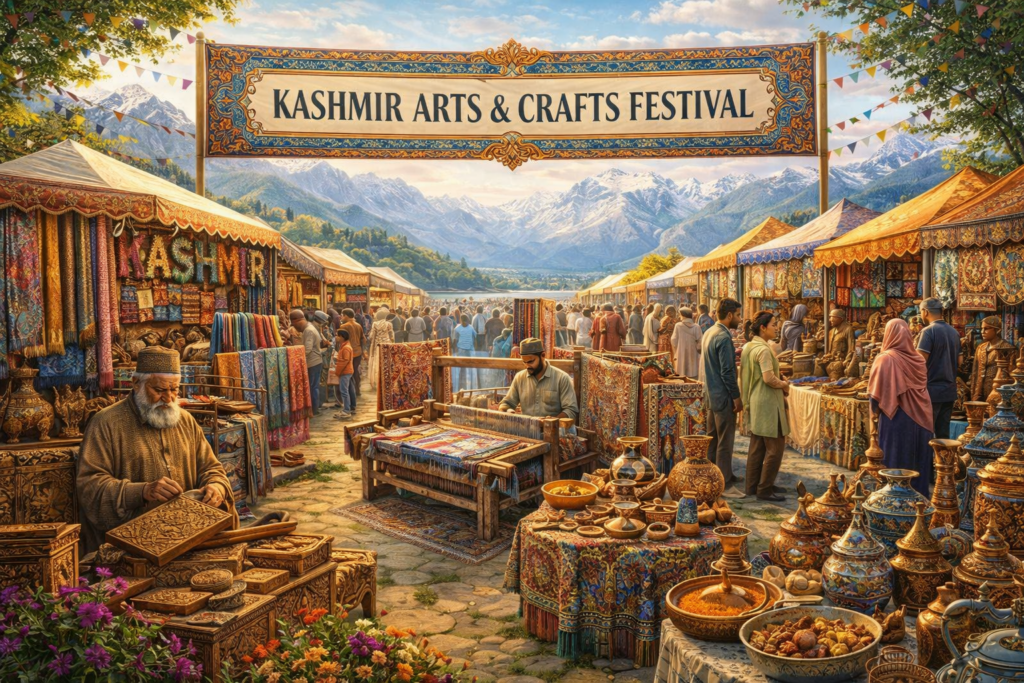
The Kashmir Arts & Crafts Festival is a vibrant cultural celebration that showcases the extraordinary artistic heritage and skilled craftsmanship of the Kashmir Valley, with Srinagar as its cultural heart. This festival serves as a living museum of traditional Kashmiri arts, bringing together master artisans, weavers, painters, and woodcarvers who have preserved centuries-old techniques through generations. Set against the scenic beauty of Srinagar, the festival transforms exhibition grounds, heritage spaces, and cultural venues into colorful marketplaces filled with creativity and tradition. Visitors are welcomed by rows of stalls displaying exquisite Pashmina shawls, hand-knotted silk and wool carpets, papier-mâché artifacts, walnut wood carvings, copperware, crewel embroidery, and chain-stitch textiles—each piece reflecting the region’s history, patience, and artistic excellence. One of the highlights of the festival is the opportunity to witness live craft demonstrations. Skilled artisans demonstrate intricate processes such as Pashmina weaving, carpet knotting, papier-mâché painting, and wood carving, allowing visitors to understand the dedication, time, and precision involved in every creation. These interactive sessions not only educate audiences but also help keep traditional techniques alive in a rapidly modernizing world. The festival is not limited to crafts alone; it is a complete cultural experience. Folk music performances, Sufi music evenings, and traditional dance forms add rhythm and soul to the event, creating an immersive atmosphere that reflects Kashmir’s spiritual and artistic depth. Storytelling sessions, poetry recitations, and cultural talks further enrich the experience by connecting visitors to the region’s rich literary and cultural traditions. Local cuisine also plays an important role in the festival. Food stalls serve authentic Kashmiri delicacies such as Rogan Josh, Yakhni, Dum Aloo, Kahwa, and traditional breads, offering visitors a taste of the valley’s culinary heritage. These flavors complement the artistic displays, making the festival a multisensory celebration. Beyond celebration, the Kashmir Arts & Crafts Festival holds significant social and economic importance. It provides a vital platform for local artisans to showcase their work, connect directly with buyers, and gain national and international recognition. By supporting handmade products, the festival helps sustain rural livelihoods, empower artisan communities, and promote sustainable tourism. Overall, the Kashmir Arts & Crafts Festival is more than an exhibition—it is a tribute to Kashmir’s identity, resilience, and creative spirit. It invites visitors to explore the soul of the valley through its crafts, music, stories, and traditions, making it a must-visit event for culture enthusiasts, travelers, designers, and anyone seeking an authentic Kashmiri experience.

Kashmir Arts & Crafts Festival Read More »

chatgpt image dec 30, 2025, 12 07 23 pm

Mela Kheer Bhawani

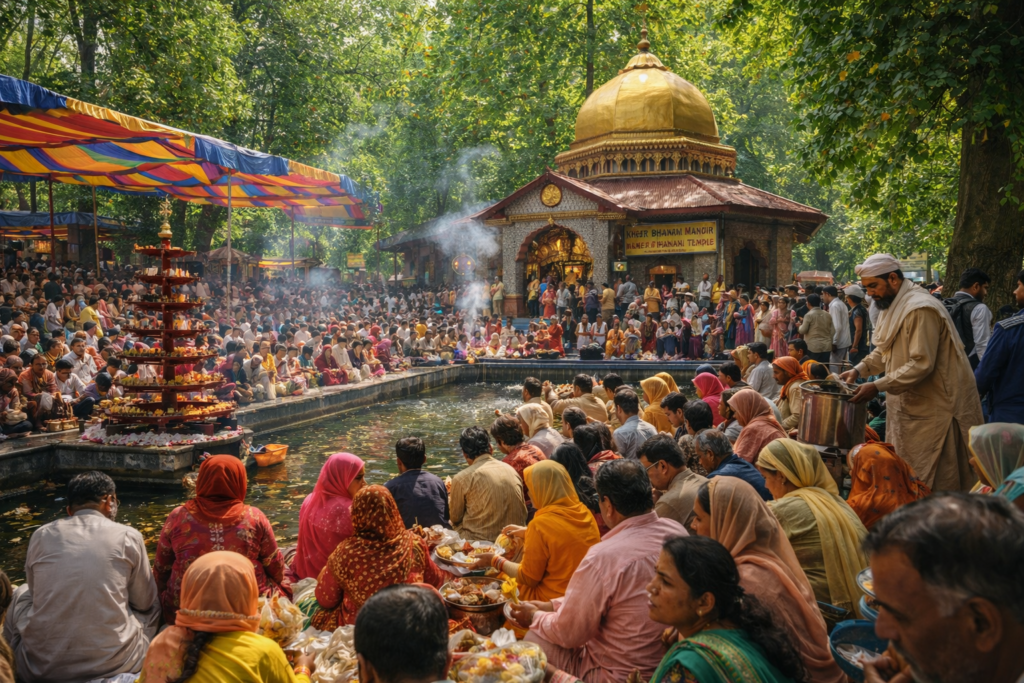
Mela Kheer Bhawani is one of the most revered and emotionally significant festivals of Kashmir, celebrated with deep devotion by the Kashmiri Pandit community. Held annually at the Kheer Bhawani Temple in Tulmulla village of Ganderbal district, near Srinagar, this sacred mela is dedicated to Goddess Ragnya Devi, the presiding deity of the temple. The festival usually takes place during Jyeshtha Ashtami (May–June), according to the Hindu lunar calendar. The temple is uniquely built around a natural spring, whose water is believed to possess divine qualities. Devotees closely observe the color of the spring’s water, as changes in its hue are traditionally considered symbolic of future events or the well-being of the region. This belief adds a profound spiritual dimension to the festival, making it deeply rooted in Kashmir’s religious consciousness. During Mela Kheer Bhawani, thousands of devotees from across India, including Kashmiri Pandits who return from different parts of the country, gather at the temple complex. The air resonates with Vedic chants, prayers, and hymns, creating a powerful atmosphere of devotion and spiritual unity. Elaborate rituals are performed by priests, and offerings are made to the goddess, the most important being kheer (sweet rice pudding), from which the festival derives its name. The mela is not only a religious observance but also a cultural reunion for the Kashmiri Pandit community. Families come together to reconnect with their ancestral homeland, share traditional meals, and revive customs passed down through generations. Temporary stalls offering religious items, local food, and traditional crafts add a festive vibrancy to the otherwise serene temple surroundings. One of the most remarkable aspects of Mela Kheer Bhawani is its role as a symbol of communal harmony in Kashmir. Local Muslim residents actively participate by helping with arrangements, security, and hospitality, reflecting Kashmir’s long-standing tradition of coexistence and mutual respect. This spirit of unity transforms the festival into a powerful message of peace and brotherhood. Surrounded by chinar trees and lush greenery, the temple complex offers a tranquil setting that enhances the spiritual experience. The calm environment, combined with collective prayer and devotion, makes Mela Kheer Bhawani a deeply moving event for devotees and visitors alike. Today, Mela Kheer Bhawani stands not just as a religious festival but as a living symbol of faith, resilience, cultural identity, and harmony. It represents the enduring connection of Kashmiri Pandits to their roots and highlights Kashmir’s rich spiritual heritage. For anyone seeking to understand the soul of Kashmir beyond its natural beauty, Mela Kheer Bhawani offers a profound glimpse into its traditions, beliefs, and timeless values.

Mela Kheer Bhawani Read More »

chatgpt image dec 30, 2025, 12 00 05 pm

Herath (Shivratri)

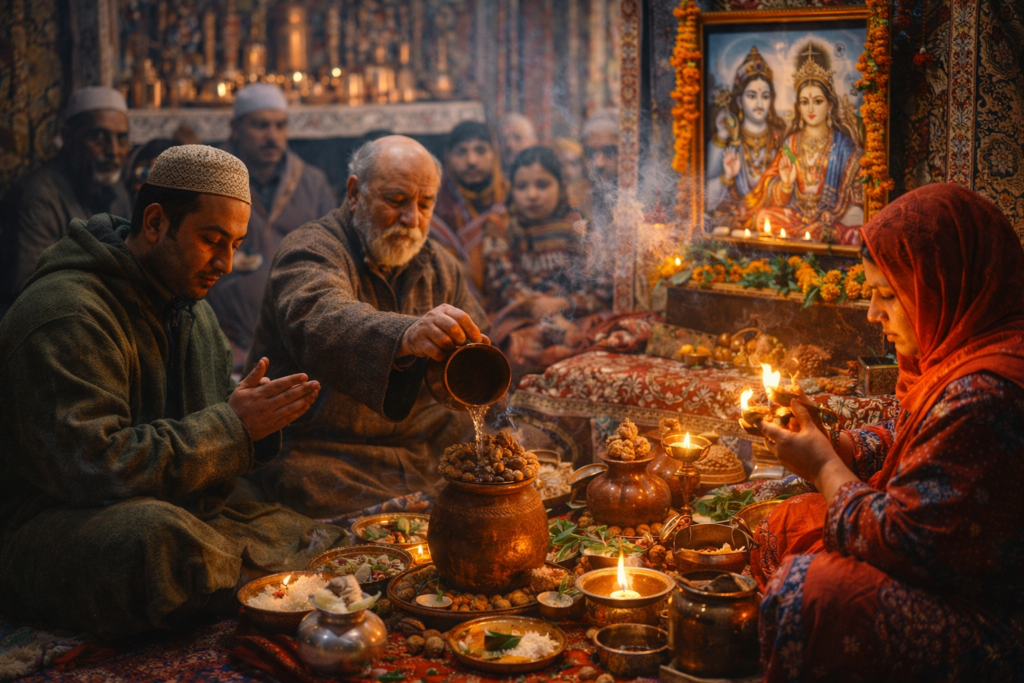
Herath, the Kashmiri Pandit celebration of Maha Shivratri, is one of the most ancient and spiritually significant festivals observed in Srinagar and across the Kashmir Valley. Unlike the one-day Shivratri celebrations seen in many parts of India, Herath is observed over several days, reflecting the deep-rooted Shaivite traditions and rich cultural heritage of Kashmir. The festival is dedicated to Lord Shiva, revered in Kashmir Shaivism as the supreme cosmic consciousness. Herath usually falls in the late winter season, during the waning days of Phalguna month, symbolizing renewal, spiritual awakening, and the triumph of light over darkness. In Srinagar, the festival transforms homes and temples into spaces of devotion, ritual purity, and family togetherness. Preparations for Herath begin days in advance. Kashmiri Pandit households thoroughly clean their homes and arrange ritual items with great care. A central feature of the celebration is the earthen pot (called a “Vatuk”), filled with water, walnuts, flowers, milk, and sacred offerings. The Vatuk represents Lord Shiva, while smaller pots symbolize Parvati and other deities. These pots are placed in a sacred corner of the house and worshipped throughout the festival. One of the most distinctive aspects of Herath is the symbolic use of walnuts. Unlike other Shivratri celebrations that focus on fasting, Herath emphasizes ritual offerings and symbolism. Walnuts are soaked in water during the rituals and later distributed among family members and relatives as sacred prasad, symbolizing prosperity, continuity, and divine blessings. The festival unfolds over several days with specific rituals such as Herath Truvah, Vatak Pooja, Salang, and Doonya Mav. Each day holds spiritual meaning, with prayers, chanting of mantras, and offerings to Lord Shiva and Goddess Parvati. Families gather to perform rituals together, reinforcing bonds of kinship and tradition. Traditional Kashmiri cuisine plays an important role during Herath. Elaborate vegetarian meals are prepared, followed by festive non-vegetarian dishes in some households, reflecting the region’s unique cultural practices. Special care is taken to maintain ritual purity while celebrating the abundance and joy associated with the festival. In Srinagar, temples and community spaces resonate with the sound of prayers, bells, and devotional hymns during Herath. The festival is not only a religious observance but also a celebration of identity and cultural continuity for the Kashmiri Pandit community. It reflects their enduring connection to the land, history, and spiritual philosophy of Kashmir. Herath stands as a powerful symbol of Kashmir’s pluralistic heritage, reminding visitors and locals alike of the valley’s ancient spiritual traditions. Celebrated with devotion, dignity, and deep symbolism, Herath continues to be a living tradition that connects generations and preserves the soul of Srinagar’s cultural legacy.

Herath (Shivratri) Read More »

chatgpt image dec 30, 2025, 11 55 35 am

Tulip Festival

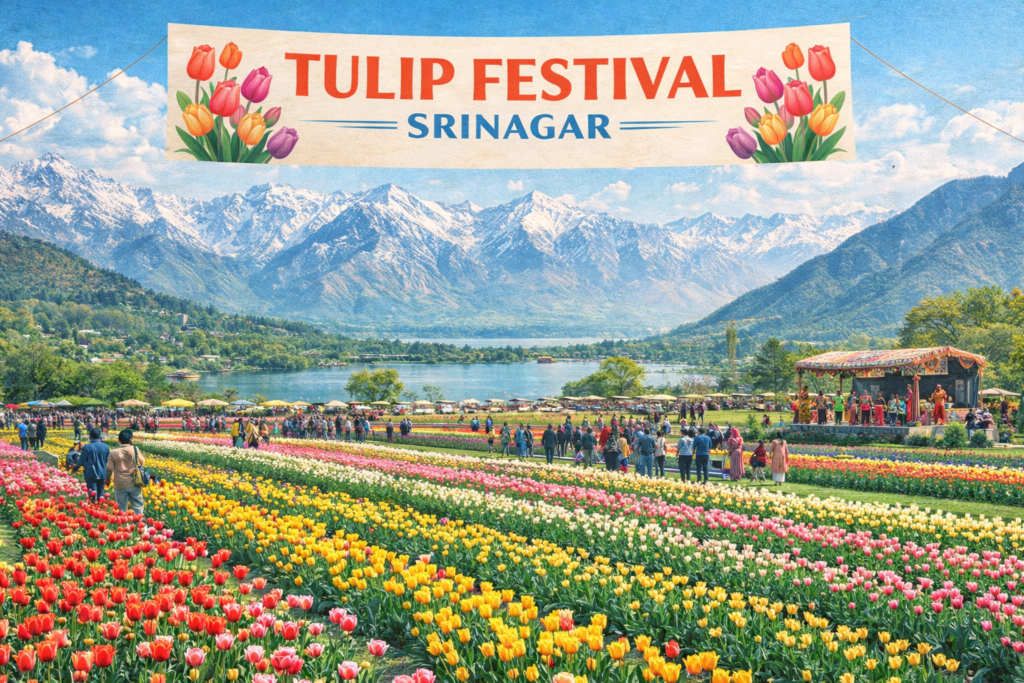
The Tulip Festival of Srinagar is one of the most spectacular and visually enchanting festivals in India, symbolizing the arrival of spring in the Kashmir Valley. Celebrated annually during late March and early April, the festival takes place at the Indira Gandhi Memorial Tulip Garden, Asia’s largest tulip garden, located at the foothills of the Zabarwan Range overlooking the iconic Dal Lake. This grand floral event transforms Srinagar into a vibrant canvas of colors, fragrances, and cultural joy. During the festival, millions of tulips in a wide variety of colors—red, yellow, pink, white, purple, orange, and bi-colored varieties—bloom in perfectly manicured terraces. The neatly aligned flower beds stretch across rolling slopes, creating breathtaking panoramic views against snow-dusted mountains and clear blue skies. The sight of these blooming tulips marks the end of the harsh winter and the beginning of a lively tourist season in Srinagar. Beyond its visual splendor, the Tulip Festival is a celebration of Kashmir’s natural beauty, horticultural excellence, and cultural heritage. Visitors can explore stalls showcasing traditional Kashmiri handicrafts such as papier-mâché items, carpets, pashmina shawls, wood carvings, and hand-embroidered textiles. These exhibits offer a glimpse into the region’s centuries-old craftsmanship and artistic traditions. Cultural performances are an integral part of the festival, with local artists presenting Kashmiri folk music and dances that reflect the valley’s soulful traditions. The melodies of traditional instruments and colorful attire add a festive rhythm to the serene surroundings of the garden. Food stalls serve authentic Kashmiri cuisine, including delicacies like kahwa, rogan josh, yakhni, dum aloo, and freshly baked bread, enhancing the sensory experience for visitors. The Tulip Festival also plays a significant role in promoting eco-tourism and sustainable tourism in the region. It highlights Srinagar’s reputation as a “garden city” and showcases the region’s expertise in floriculture and landscape design. The event attracts photographers, nature lovers, botanists, and travelers from across the country and abroad, making it a major highlight in Kashmir’s tourism calendar. For locals, the festival is a source of pride and seasonal celebration, while for tourists, it offers a rare opportunity to witness spring in its purest and most colorful form. With its harmonious blend of nature, culture, and hospitality, the Tulip Festival of Srinagar stands as a symbol of renewal, beauty, and hope—inviting visitors to experience the timeless charm of Kashmir in full bloom.

Tulip Festival Read More »