
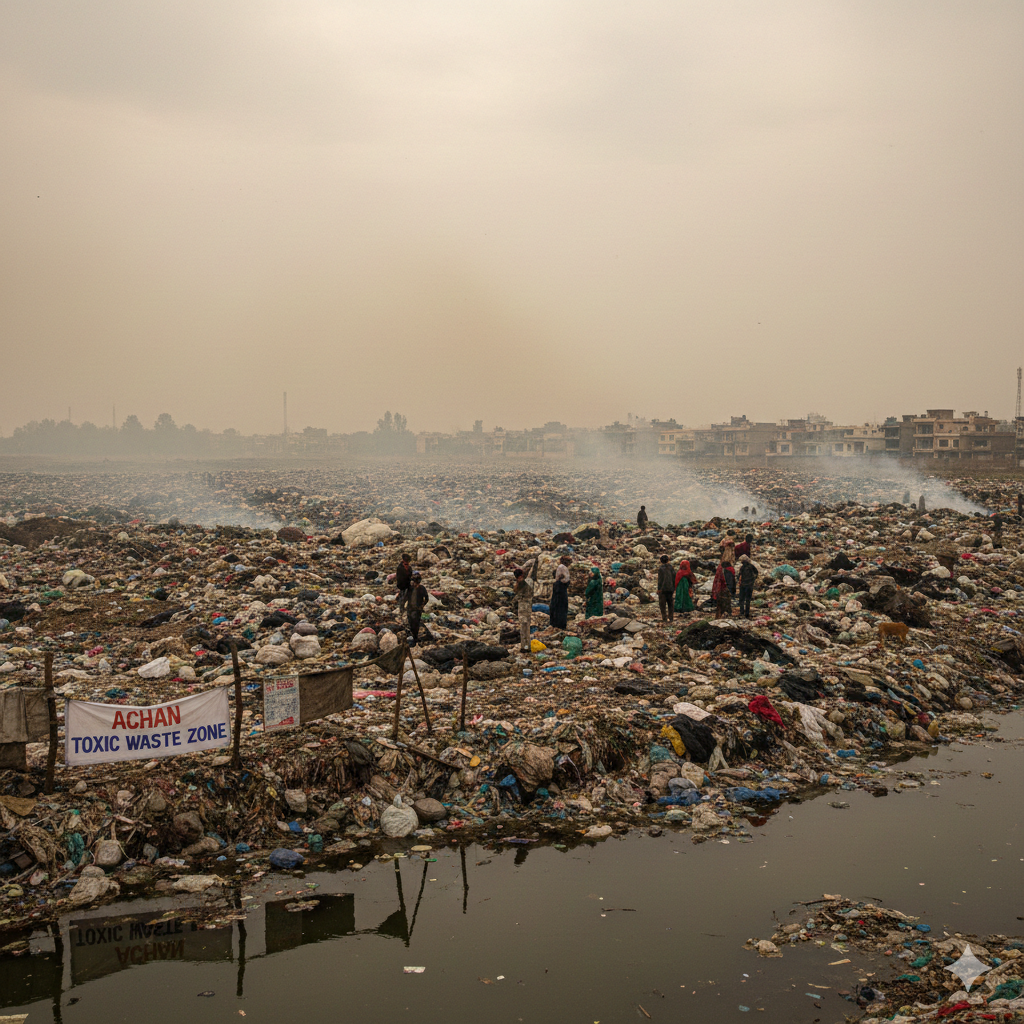
The Achan Garbage Disposal Site, located on the outskirts of Srinagar, has long been a cause of serious concern for residents, environmentalists, and public health experts. Established decades ago as the primary dumping ground for the city’s municipal waste, the site has grown into a massive landfill that now poses a significant threat to human health, natural ecosystems, and the overall environmental balance of the Kashmir Valley.
Every day, hundreds of tons of mixed waste—ranging from household garbage and plastic waste to biomedical refuse and construction debris—are dumped at Achan with little to no scientific segregation. Over the years, the landfill has expanded beyond its intended capacity, turning into a towering mound of decomposing waste. The absence of modern waste-processing infrastructure, such as effective recycling units and scientific landfill management systems, has worsened the situation.
One of the most alarming consequences of the Achan landfill is the release of toxic leachate. This dark, foul-smelling liquid seeps through layers of garbage and penetrates the soil, contaminating nearby water bodies and groundwater sources. Residents living in surrounding areas fear that this contamination has already entered drinking water supplies, increasing the risk of waterborne diseases and long-term health complications. Medical professionals have repeatedly warned about rising cases of respiratory problems, skin allergies, gastrointestinal illnesses, and other chronic conditions among people living near the site.
Air pollution is another major issue emanating from the garbage dump. The continuous decomposition of organic waste releases harmful gases such as methane and ammonia into the atmosphere. At times, spontaneous fires break out within the landfill, releasing thick smoke and toxic fumes that spread across nearby neighborhoods. These emissions not only cause breathing difficulties but also contribute to climate change, as methane is a potent greenhouse gas.
The environmental impact extends beyond human settlements. The landfill is located close to ecologically sensitive wetland areas, which are vital for biodiversity and flood control in the region. Toxic runoff and plastic waste threaten local flora and fauna, disrupt bird habitats, and degrade soil quality. Stray animals, birds, and insects feeding on the waste further spread contamination, increasing the risk of disease transmission across a wider area.
Despite repeated public protests, expert warnings, and directives from environmental authorities, progress toward a permanent solution has been slow. While authorities have proposed waste-to-energy projects and scientific waste management plans, implementation remains inconsistent. Many residents believe that temporary measures such as partial capping or spraying chemicals do little to address the root cause of the problem.
The crisis at Achan reflects a larger issue of urban waste mismanagement in Srinagar. Rapid population growth, increased consumption, and inadequate civic infrastructure have placed enormous pressure on the city’s waste disposal systems. Without urgent intervention, the landfill will continue to expand, compounding health risks and environmental damage.
Environmental activists and civil society groups are calling for immediate action, including scientific closure of the existing landfill, establishment of decentralized waste processing units, strict waste segregation at source, and increased public awareness. They emphasize that sustainable waste management is not only a civic responsibility but also a moral obligation to protect Kashmir’s fragile ecosystem and the health of future generations.
The situation at the Achan Garbage Site serves as a stark reminder that neglecting environmental issues can have long-lasting and irreversible consequences. Addressing this crisis requires coordinated efforts from government authorities, local bodies, and citizens alike to ensure a cleaner, healthier, and more sustainable Srinagar.